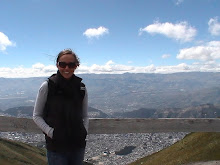
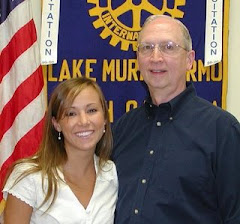
Click on the links to see all of my pictures so far!
Week 1:
http://www.facebook.com/album.php?aid=2353003&id=12603504&l=da642c56af
Week 2:
http://www.facebook.com/album.php?aid=2354871&id=12603504&l=b41410909b
Week 3:
http://www.facebook.com/album.php?aid=2358676&id=12603504&l=0918640496
Wednesday, August 12, 2009

Hola from Ecuador and a Lesson in Geography!
Hola and Saludos Friends and Family!
I hope all is well for you all in the good ole USA! Today is a holiday here in Ecuador so no work or school for anyone...jealous?
Last week was pretty full! I had my classes Monday, Tuesday, and Wednesday as usual. Tuesday and Thursday I volunteered and worked with the kids in the afternoon, but really I don't feel like it is enough! Its only a few hours and we just work on basic reading and math skills and then play outside for a bit. I am going to focus this week on designing some city beautification projects and figuring out who I need to speak with in the city to make them happen. I am thinking murals and maybe some sort of contest to design an anti-litering campaign (like a contest for kids to design posters that can be used by the government). School starts back in September so I have a little time to work on this one!
Wednesday I visited the Museo Banco Central (nothing to do with a bank though). It was interesting because it was full of relics and models of tools and other artifacts used by the various indigenous cultures around the country prior to the arrival of the Spaniards...the art, jewelry, pots, statues, etc look different and are made from different materials depending on the region of the country...which brings us to today's geography lession (briefly)...
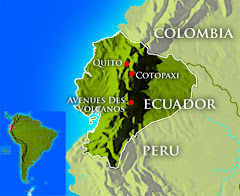
(sorry if this is boring to some of you...BUT I am here as a Cultural Ambassador, not just a tourist!). Ecuador is known for its 4 very diverse regions. First, there is the Galapagos Islands, which I am dying to visit, but to do so is quite expensive (although cheaper for Ecuadorians than foreigners). To visit, you have to fly out of Guayaquil (the largest city in the country, a good 10 hour drive from Quito, I would have to fly). Once you reach the islands, you can take small cruises (small boats, not cruise ships like Carnival) on trips lasting anywhere from 4 days to a few weeks.
Next, is the Coast. This region is known for its beaches, food, and agriculture. There are a few popular places to surf, and I would love to spend a weekend just lying on the beach. In this region, they grow plantains, rice, and tons of fruit, and you can eat some of the best seafood you can imagine. I was actually at the beach this weekend spending time with my Host Rotarian and her family and saw a boat of fishermen pull up and take a fresh load of fish into the restaurants lining the beach--I had the best shrimp of my life (which says a lot becuase I am really picky with shrimp). I am starting to get sort of tired of soups though...throughout the entire country, soup is really popular...often with fish or chicken but occasionally with beef, bull penis, lamb intestines, plantains...depends on where you are (and how brave you are!). Since pretty much everything they eat here is either beef, pork, or deep fried (and the fact that I am EXTREMELY picky) I have been eating tons of soup and ceviche and fruit (although I do love an empanada or some fried chifles/plaintains from time to time too). I was a little suprised though to find out that the Coastal Region is the driest of the four regions, and many of the cities we passed through were extremely dusty and dirty. I don't think I could live there. Manta, the popular touristy and more luxiurous city right on the coast (huge port city too, most of the imports come through Manta) was very clean and moden...I'd love to visit there (or the nearby surfer beach called Mantanita...or little Manta).
While near the coast this weekend, my Host Rotarian did me a huge favor. I had mentioned the beaches where you can whale watch to her before we left, and on Saturday, she accompanied me (along with her nephew, a great nephew, and great niece) to Porto Cayo, about an hour and a half from Portoviejo (the more inland city where we spent the weekend...not one I would recommend you visit). From there, the younger nephew and niece and I paid for a boat tour that lasted about 1.5 hours to go watch whales! It was kind of overcast and I had heard that this year there had not been many whales so I was worried that we would be disappointed, but it was amazing! Bad news is that when I tried to take a picture of the first whales we saw, my camara died. We ended following around a group of about 4 whales...three males fighting over one female (its mating season...). One lost fairly early in the battle and went off but two battled for quite a bit! At first, we just saw their backs as they arched near the top of the water and swam along but finally we saw a few tails rise out of the water. Then one of the whales raised the top half of his body out of the water, turned a bit, and crashed back into the water! It was breathtaking! Then, the two males began really going at it! They turn on their side, lift their fins and slap them back down into the water. Near the end of our tour, the two males popped their heads out of the water a few times...it was really cool!
The next region is called the Sierra. The drive from the city to the Sierra is really pretty...as you move inland, things become less dusty and much more green. Almost like driving through a forest in the US, but with tropical trees...not quite a forest, not quite jungle. The mountains of Ecuador are actually the top part of the Andean Mountain range. I won't talk much about the mountains here because I think I have done a lot of that already (Quito is located in the Sierra...9,300 feet up, wedged in a valley). Many of the mountains of Ecuador are in fact volcanoes...some of which remain active...and some of the mountains and volcanoes are snow capped (and beautiful). I think this coming weekend I will travel to Cotopaxi...a snow capped volcanoe fairly close to Quito.
The next region is called the Oriente...here you find La Selva (the jungle). I don't know much about this region yet, other than that it is beautiful...full of animals and beautiful plants...that I might get Malaria if I don't take my pills...and that there is a particular indigenous community that will kill you if you try to enter because they want to maintain their indigenous lifestyles. I also learned in school that many of the indigenous cultures in this region have been and are exploited terribly by oil companies. Today, oil is Ecuador's primary export..supposedly the government is trying to do more to protect the jungle and restrict where oil companies can drill, but we all know how that story ends.... I will write more about the Oriente after I visit it in September.
So like I said before, today is a national holiday. It makes the 200th anniversary of the first declaration/battle for independence. Quito is referred to as "La Luz de America" or the light of America because it was the first city to declare independence from Europe. In the end, it was one of the last places to actually achieve independence, but it led the way for later independence movements. Unfortunately, I missed most of the festivities which occurred yesterday because we were traveling from Portoviejo (an 8 hour drive...Ecuador is not a large country, but travel anywhere takes a long time because the roads wind and weave through the mountains and the trek is slow!). Apparantely, every park and plaza yesterday had some sort of free concert, performance, or art display...I did here some fireworks as I returned home around 10 last night.
Today, I headed to the Historic Center after doing some laundry (which I wanted to point out because I think this is interesting too...pretty much everyone has a washer, but they don't always use it. On the contrary, very few have driers..so i wash my clothes in the washer and then hang them outside to dry...which reminds me...I better get them now before it gets dark and cold!). A friend from school and I were hoping to see what was happening in the Historic Center and visit a few museums (because we were told this whole week/month everything is open and free)...it turned out however that pretty much everything was closed. We did have some good luck though! This weekened, Presidents from around Latin America visited Ecuador to celebrate the independence. Also, the President (Corea) was inducted this morning as the Secretary General of UNASUR (United Nations of South America....UNASUR is a political and economic group of South American countries, created in 2008 and modeled after the EU...the political headquarters is in Quito. Just as my friend and I were finishing lunch in the Plaza Grande (where the President's Palace is located) and heading out to see if a museum we wanted to visit was open, we noticed a lot of activity on the corner of the street we were trying to cross. After battling police and members of the military, we finally got across and asked what was going on. Our timing was perject...just as we got across...a motor cade pulled up. A few secret servicemen jumped out and open the car door and out stepped Raul Castro. A minute later, another motorcade followed by two large buses. Out of the first...more security guards and assistants...out of the second...the President of Peru, Costa Rica...a cute prince from Spain, and then Hugo Chavez! We were seriously only about ten feet away from him. It was crazy! I snapped a quick photo of Chavez....I will pass it along later. After asking around a bit, we found out that a lot of people like Chavez a lot....It seems to be about half and half here. A lot of conservatives think the current Ecuadorian President is too young and the reason why there is high unemployment...these same folks admire Chavez for his style of governing. Another Rotary Scholar who spent 6 months in Venezuela said it is about 50/50 there as well. After the crowd cleared...we wandered a bit and found all the museums and churches were closed.
This is getting long...but one more quick note. I passed along in a previous email some favorite phrases and words used frequently here...I have another. Ecuadorians are EXTREMELY proud of their country and their history. You would be amazed by how much these people know about eveything...every church, street, plant, town, city, fruit, etc. One thing I love that they say...and I am not sure if it means anything to them or just to me, and maybe other Spanish speaking countries also say this, i do not know...is the verb "conocer. " It means to get to know or be familiar with, and I learned it in school many years ago. I was taught that you use this verb when you refer to knowing a person (literally it translates as "to know") but not when you are saying to know information. I like it because we don't use such a verb in the US in the way they do here. When we speak of the places we have visited or give recommendations to tourists, we say "you have to see" or "I saw" or maybe "I have been there" or "I have visited." Here they tell you that you need to "conocer" or you need to get to know this place or that place. To me, it shows more respect and admiration--you are not just seeing something, you become familiar with it. It maybe nothing, but I kind of like it! Its like telling someone to make sure they stop and smell the roses while they are passing through a place.
Well this has gotten quite long! I hope you enjoyed! Have a great day! Thanks once again for emails and updates! Let me know if anyone wants to come visit and get to know Ecuador...flights should start getting a little cheaper in the next few months as the tourist season calms down!
Love you all!
I hope all is well for you all in the good ole USA! Today is a holiday here in Ecuador so no work or school for anyone...jealous?
Last week was pretty full! I had my classes Monday, Tuesday, and Wednesday as usual. Tuesday and Thursday I volunteered and worked with the kids in the afternoon, but really I don't feel like it is enough! Its only a few hours and we just work on basic reading and math skills and then play outside for a bit. I am going to focus this week on designing some city beautification projects and figuring out who I need to speak with in the city to make them happen. I am thinking murals and maybe some sort of contest to design an anti-litering campaign (like a contest for kids to design posters that can be used by the government). School starts back in September so I have a little time to work on this one!
Wednesday I visited the Museo Banco Central (nothing to do with a bank though). It was interesting because it was full of relics and models of tools and other artifacts used by the various indigenous cultures around the country prior to the arrival of the Spaniards...the art, jewelry, pots, statues, etc look different and are made from different materials depending on the region of the country...which brings us to today's geography lession (briefly)...
(sorry if this is boring to some of you...BUT I am here as a Cultural Ambassador, not just a tourist!). Ecuador is known for its 4 very diverse regions. First, there is the Galapagos Islands, which I am dying to visit, but to do so is quite expensive (although cheaper for Ecuadorians than foreigners). To visit, you have to fly out of Guayaquil (the largest city in the country, a good 10 hour drive from Quito, I would have to fly). Once you reach the islands, you can take small cruises (small boats, not cruise ships like Carnival) on trips lasting anywhere from 4 days to a few weeks.
Next, is the Coast. This region is known for its beaches, food, and agriculture. There are a few popular places to surf, and I would love to spend a weekend just lying on the beach. In this region, they grow plantains, rice, and tons of fruit, and you can eat some of the best seafood you can imagine. I was actually at the beach this weekend spending time with my Host Rotarian and her family and saw a boat of fishermen pull up and take a fresh load of fish into the restaurants lining the beach--I had the best shrimp of my life (which says a lot becuase I am really picky with shrimp). I am starting to get sort of tired of soups though...throughout the entire country, soup is really popular...often with fish or chicken but occasionally with beef, bull penis, lamb intestines, plantains...depends on where you are (and how brave you are!). Since pretty much everything they eat here is either beef, pork, or deep fried (and the fact that I am EXTREMELY picky) I have been eating tons of soup and ceviche and fruit (although I do love an empanada or some fried chifles/plaintains from time to time too). I was a little suprised though to find out that the Coastal Region is the driest of the four regions, and many of the cities we passed through were extremely dusty and dirty. I don't think I could live there. Manta, the popular touristy and more luxiurous city right on the coast (huge port city too, most of the imports come through Manta) was very clean and moden...I'd love to visit there (or the nearby surfer beach called Mantanita...or little Manta).
While near the coast this weekend, my Host Rotarian did me a huge favor. I had mentioned the beaches where you can whale watch to her before we left, and on Saturday, she accompanied me (along with her nephew, a great nephew, and great niece) to Porto Cayo, about an hour and a half from Portoviejo (the more inland city where we spent the weekend...not one I would recommend you visit). From there, the younger nephew and niece and I paid for a boat tour that lasted about 1.5 hours to go watch whales! It was kind of overcast and I had heard that this year there had not been many whales so I was worried that we would be disappointed, but it was amazing! Bad news is that when I tried to take a picture of the first whales we saw, my camara died. We ended following around a group of about 4 whales...three males fighting over one female (its mating season...). One lost fairly early in the battle and went off but two battled for quite a bit! At first, we just saw their backs as they arched near the top of the water and swam along but finally we saw a few tails rise out of the water. Then one of the whales raised the top half of his body out of the water, turned a bit, and crashed back into the water! It was breathtaking! Then, the two males began really going at it! They turn on their side, lift their fins and slap them back down into the water. Near the end of our tour, the two males popped their heads out of the water a few times...it was really cool!
The next region is called the Sierra. The drive from the city to the Sierra is really pretty...as you move inland, things become less dusty and much more green. Almost like driving through a forest in the US, but with tropical trees...not quite a forest, not quite jungle. The mountains of Ecuador are actually the top part of the Andean Mountain range. I won't talk much about the mountains here because I think I have done a lot of that already (Quito is located in the Sierra...9,300 feet up, wedged in a valley). Many of the mountains of Ecuador are in fact volcanoes...some of which remain active...and some of the mountains and volcanoes are snow capped (and beautiful). I think this coming weekend I will travel to Cotopaxi...a snow capped volcanoe fairly close to Quito.
The next region is called the Oriente...here you find La Selva (the jungle). I don't know much about this region yet, other than that it is beautiful...full of animals and beautiful plants...that I might get Malaria if I don't take my pills...and that there is a particular indigenous community that will kill you if you try to enter because they want to maintain their indigenous lifestyles. I also learned in school that many of the indigenous cultures in this region have been and are exploited terribly by oil companies. Today, oil is Ecuador's primary export..supposedly the government is trying to do more to protect the jungle and restrict where oil companies can drill, but we all know how that story ends.... I will write more about the Oriente after I visit it in September.
So like I said before, today is a national holiday. It makes the 200th anniversary of the first declaration/battle for independence. Quito is referred to as "La Luz de America" or the light of America because it was the first city to declare independence from Europe. In the end, it was one of the last places to actually achieve independence, but it led the way for later independence movements. Unfortunately, I missed most of the festivities which occurred yesterday because we were traveling from Portoviejo (an 8 hour drive...Ecuador is not a large country, but travel anywhere takes a long time because the roads wind and weave through the mountains and the trek is slow!). Apparantely, every park and plaza yesterday had some sort of free concert, performance, or art display...I did here some fireworks as I returned home around 10 last night.
Today, I headed to the Historic Center after doing some laundry (which I wanted to point out because I think this is interesting too...pretty much everyone has a washer, but they don't always use it. On the contrary, very few have driers..so i wash my clothes in the washer and then hang them outside to dry...which reminds me...I better get them now before it gets dark and cold!). A friend from school and I were hoping to see what was happening in the Historic Center and visit a few museums (because we were told this whole week/month everything is open and free)...it turned out however that pretty much everything was closed. We did have some good luck though! This weekened, Presidents from around Latin America visited Ecuador to celebrate the independence. Also, the President (Corea) was inducted this morning as the Secretary General of UNASUR (United Nations of South America....UNASUR is a political and economic group of South American countries, created in 2008 and modeled after the EU...the political headquarters is in Quito. Just as my friend and I were finishing lunch in the Plaza Grande (where the President's Palace is located) and heading out to see if a museum we wanted to visit was open, we noticed a lot of activity on the corner of the street we were trying to cross. After battling police and members of the military, we finally got across and asked what was going on. Our timing was perject...just as we got across...a motor cade pulled up. A few secret servicemen jumped out and open the car door and out stepped Raul Castro. A minute later, another motorcade followed by two large buses. Out of the first...more security guards and assistants...out of the second...the President of Peru, Costa Rica...a cute prince from Spain, and then Hugo Chavez! We were seriously only about ten feet away from him. It was crazy! I snapped a quick photo of Chavez....I will pass it along later. After asking around a bit, we found out that a lot of people like Chavez a lot....It seems to be about half and half here. A lot of conservatives think the current Ecuadorian President is too young and the reason why there is high unemployment...these same folks admire Chavez for his style of governing. Another Rotary Scholar who spent 6 months in Venezuela said it is about 50/50 there as well. After the crowd cleared...we wandered a bit and found all the museums and churches were closed.
This is getting long...but one more quick note. I passed along in a previous email some favorite phrases and words used frequently here...I have another. Ecuadorians are EXTREMELY proud of their country and their history. You would be amazed by how much these people know about eveything...every church, street, plant, town, city, fruit, etc. One thing I love that they say...and I am not sure if it means anything to them or just to me, and maybe other Spanish speaking countries also say this, i do not know...is the verb "conocer. " It means to get to know or be familiar with, and I learned it in school many years ago. I was taught that you use this verb when you refer to knowing a person (literally it translates as "to know") but not when you are saying to know information. I like it because we don't use such a verb in the US in the way they do here. When we speak of the places we have visited or give recommendations to tourists, we say "you have to see" or "I saw" or maybe "I have been there" or "I have visited." Here they tell you that you need to "conocer" or you need to get to know this place or that place. To me, it shows more respect and admiration--you are not just seeing something, you become familiar with it. It maybe nothing, but I kind of like it! Its like telling someone to make sure they stop and smell the roses while they are passing through a place.
Well this has gotten quite long! I hope you enjoyed! Have a great day! Thanks once again for emails and updates! Let me know if anyone wants to come visit and get to know Ecuador...flights should start getting a little cheaper in the next few months as the tourist season calms down!
Love you all!
Monday, August 3, 2009
Hola Friends and Family!
Sorry it has been a bit since I have written! I hope everyone is doing well up there in the USA (or oosa as they say it often here...). I certainly miss you all! Thanks for the emails and well wishes! It is great to hear from you all! So the last time I wrote was Sunday evening (I think) and it is already Thursday so I have lots to fill you all in...but I will try not to make it a history book like my last email! haha!
As I am sure I have written before, the way my school works is classes in the mornings and little field trips around Quito and the surrounding areas in the afternoons....except for on Tuesdays and Thursday when I volunteer instead.
Monday, we went to visit El Panecillo--a large statue of a virgen that overlooks Quito. It is relatively new...finished in the 1970s. It has a variety of names and can be seen from many parts of the city--the best part, in my opinion was the beautiful views of the Old City and North Quito from the front and of South Quito, a mostly residencial sector, behind it.
Our trip Wednesday was AMAZING! We went in the morning to the Teleferiqo, which is a gondolah ride to the top of a mountain, 4,100 meters (I think thats around 12,300 feet or so?!). The view is absolutely breath taking! From there, we climbed another few hundred feet up to have an even better view of Quito in front of us and mountains and volcanoes all around us. It is a site that I wish you all could see for yourselves because neither words nor pictures do it justice! It was a little cloudy in the distance, so the views of Cotopaxi, the big snow capped volcano fairly close by, were not so great...but the "hiking" was a good preparation for when I visit it in the next few weeks! It takes a little time to get used to the altitude! When I do get to Cotopaxi finally...you take a bus or car up part of the way and then walk up part of it...til you reach the snow, then if you are hardcore, you can rent equipment to climb to the top--not recommended for beginners like me!
Tuesday I began my volunteer work with the Fundacion Salesiano por los Ninos de la Calle (Salesian Foundation for the Children of the Street). Currently, six children live in this project site, but others spend the day there playing games, getting tutored, bathing, eating, etc. The facility is very nice, and is mostly staffed by volunteers like myself. On Tuesday there were about 12 kids total, I worked with the two youngest boys playing a memory game to help them learn their letters...I taught them how to do a high five and the youngest one gave me a giant hug and smooch (which I am learning he loves to do). Then I watched kids play while the parents of some of the children (not all of them really have parents) met with the staff because the staff is taking them to the coast for a few days the week after next. For the most part, these children are all really sweet, but they are constantly getting in fights and punching and kicking each other. They worst culprit Tuesday was the only girl there! Yesterday at school, I had my teacher teach me phrases to use with them (like sit down, be quiet, behave or else..., wait your turn, etc). Today, I help two of the slightly older children (around 9ish) with multiplication and grammar. Then another volunteer, a girl from Spain, begain to teach them English. It was really interesting learning how others learn your language. I got up and helped her teach the boys a few phrases and the different forms of the verb "to be." Before I left, I gave them each some honey and sesame covered peanuts and a big hug...a few of them remembered "good bye" which was nice!
Wednesday I had a little drama at the post office...well kinda a lot of drama...like on the verge of tears and happy that the jerk working there didn't understand the names I was calling him under my breath in English. Before I left the States, I collected books and some school supplies like crayons and paper and pencils to donate to the other organization I am working with...I ended up paying 150 bucks to ship three boxes. In Ecuador, you have to pay huge taxes based on the declared value of the goods shipped and the weight of the package except for on books...books are essentially free. The young guy working at the post office, in charge of cutting open the boxes, rummaging through your belongings and filling out the form declaring what is in the boxes, was such a pain! One box was a few coloring books, scraps of paper, scissors, etc. Another was all books except for one package of used colored pencils (thanks Caroline!), and the other was half crayons and half coloring books...maybe with a few books stuck in too. This kid told us that coloring books are not real books (even though this coloring books actually have a story written in them too) so I had to pay for those. In the box with half crayons (not even half...like four or five little boxes) and some books and coloring books, he said the crayons weigh more than the books/coloring books so I had to pay for that. Then he called over his boss to see if I have to pay for the colored pencils that were in the box of books. We begged him to be more helpful or to let me put all the books into two boxes and the random stuff in other and he said no--even though we told him over and over it was a donation. Finally, we got to the counter to figure out how much to pay and asked the woman there for help since it was a donation for children and she said that the post office is a business just like any other. Tomorrow, I am going to have to pay $103 to get these boxes from the post office! What a pain!
Other than that...things are great! I am enjoying my school...a little sad that the two girls I have befriended are both leaving this weekend, but hopefully more students will arrive soon!
So, I know this is getting long, but just for fun...
Things You See and Hear everywhere in Quito (or at least, that I have seen)...
Bakeries...on every corner and half way in between with the most delicious looking desserts ever! so tempting...there is one I run by that smells just like my Grandma's rolls...oh yummy!
Furniture Stores...a few on every block
Bras! I guess it is the fashion...especially for older women...to wear see through shirts!
Litter...people don't think twice about it!
People greeting each other with hugs and kisses--which I love!
Men singing...which i love too
Little stores selling DVDs cheap!
Soccer fans (duh)
People selling weird things like batteries, CD cases, remote controls, cigarettes, candy, clothes pins, etc on the street corners
Street performers performing at stop lights (juggling balls or knives!)
Car horns....cars rarely stop at stop signs...they just honk! and if you are too slow crossing the street or hesitate too long at a light, they honk again
Tons of fresh fruit all over! which i love too!
Tshirts with English phrases....probably not understood by those wearing them
the 80s style (bright tshirts, tight jeans, faux hawks, etc)
Dogs...but not very well taken care of....
American things I have seen: McDonalds, Papa Johns, KFC (everywhere), Hilton, Sheraton, Marriott, Nestle (everywhere)
My favorite new words and phrases:
Que Chevere (kay chev-er-ay): How Great/Cool
Muy amable (moo-ee ah-ma-bleh): Literally, very nice...but when it is used, it means very kind of you...so whenever you buy something in a store or someone is of assistance to you...you hear Gracias, si muy amable, gracias.
Hasta la vista bebe: (no joke, my host parents have said it three times)
Hija/Hijo: literally means daughter/son but used frequently as a term of endearment
Things you never/rarely see:
Flip flops or casual sandals
Baby strollers (babies are just strapped to your back with a blanket)
Garbage cans on the street
Natural blondes
Starbucks (which I miss)
Diet Coca Cola (Coca Cola Light occasionally, Diet Pepsi never)
Turkey (I am dying for a turkey sandwich!)
Mimosas and good wine (occasionally something decent from Chile but kinda expensive)! and yes...I miss them both very much!
I guess thats its for now! Sorry it is so long! I miss you all and love you all very much! Send me updates on your lives too! Have a great day/night! Hugs and kisses!Courtney
Sorry it has been a bit since I have written! I hope everyone is doing well up there in the USA (or oosa as they say it often here...). I certainly miss you all! Thanks for the emails and well wishes! It is great to hear from you all! So the last time I wrote was Sunday evening (I think) and it is already Thursday so I have lots to fill you all in...but I will try not to make it a history book like my last email! haha!
As I am sure I have written before, the way my school works is classes in the mornings and little field trips around Quito and the surrounding areas in the afternoons....except for on Tuesdays and Thursday when I volunteer instead.
Monday, we went to visit El Panecillo--a large statue of a virgen that overlooks Quito. It is relatively new...finished in the 1970s. It has a variety of names and can be seen from many parts of the city--the best part, in my opinion was the beautiful views of the Old City and North Quito from the front and of South Quito, a mostly residencial sector, behind it.
Our trip Wednesday was AMAZING! We went in the morning to the Teleferiqo, which is a gondolah ride to the top of a mountain, 4,100 meters (I think thats around 12,300 feet or so?!). The view is absolutely breath taking! From there, we climbed another few hundred feet up to have an even better view of Quito in front of us and mountains and volcanoes all around us. It is a site that I wish you all could see for yourselves because neither words nor pictures do it justice! It was a little cloudy in the distance, so the views of Cotopaxi, the big snow capped volcano fairly close by, were not so great...but the "hiking" was a good preparation for when I visit it in the next few weeks! It takes a little time to get used to the altitude! When I do get to Cotopaxi finally...you take a bus or car up part of the way and then walk up part of it...til you reach the snow, then if you are hardcore, you can rent equipment to climb to the top--not recommended for beginners like me!
Tuesday I began my volunteer work with the Fundacion Salesiano por los Ninos de la Calle (Salesian Foundation for the Children of the Street). Currently, six children live in this project site, but others spend the day there playing games, getting tutored, bathing, eating, etc. The facility is very nice, and is mostly staffed by volunteers like myself. On Tuesday there were about 12 kids total, I worked with the two youngest boys playing a memory game to help them learn their letters...I taught them how to do a high five and the youngest one gave me a giant hug and smooch (which I am learning he loves to do). Then I watched kids play while the parents of some of the children (not all of them really have parents) met with the staff because the staff is taking them to the coast for a few days the week after next. For the most part, these children are all really sweet, but they are constantly getting in fights and punching and kicking each other. They worst culprit Tuesday was the only girl there! Yesterday at school, I had my teacher teach me phrases to use with them (like sit down, be quiet, behave or else..., wait your turn, etc). Today, I help two of the slightly older children (around 9ish) with multiplication and grammar. Then another volunteer, a girl from Spain, begain to teach them English. It was really interesting learning how others learn your language. I got up and helped her teach the boys a few phrases and the different forms of the verb "to be." Before I left, I gave them each some honey and sesame covered peanuts and a big hug...a few of them remembered "good bye" which was nice!
Wednesday I had a little drama at the post office...well kinda a lot of drama...like on the verge of tears and happy that the jerk working there didn't understand the names I was calling him under my breath in English. Before I left the States, I collected books and some school supplies like crayons and paper and pencils to donate to the other organization I am working with...I ended up paying 150 bucks to ship three boxes. In Ecuador, you have to pay huge taxes based on the declared value of the goods shipped and the weight of the package except for on books...books are essentially free. The young guy working at the post office, in charge of cutting open the boxes, rummaging through your belongings and filling out the form declaring what is in the boxes, was such a pain! One box was a few coloring books, scraps of paper, scissors, etc. Another was all books except for one package of used colored pencils (thanks Caroline!), and the other was half crayons and half coloring books...maybe with a few books stuck in too. This kid told us that coloring books are not real books (even though this coloring books actually have a story written in them too) so I had to pay for those. In the box with half crayons (not even half...like four or five little boxes) and some books and coloring books, he said the crayons weigh more than the books/coloring books so I had to pay for that. Then he called over his boss to see if I have to pay for the colored pencils that were in the box of books. We begged him to be more helpful or to let me put all the books into two boxes and the random stuff in other and he said no--even though we told him over and over it was a donation. Finally, we got to the counter to figure out how much to pay and asked the woman there for help since it was a donation for children and she said that the post office is a business just like any other. Tomorrow, I am going to have to pay $103 to get these boxes from the post office! What a pain!
Other than that...things are great! I am enjoying my school...a little sad that the two girls I have befriended are both leaving this weekend, but hopefully more students will arrive soon!
So, I know this is getting long, but just for fun...
Things You See and Hear everywhere in Quito (or at least, that I have seen)...
Bakeries...on every corner and half way in between with the most delicious looking desserts ever! so tempting...there is one I run by that smells just like my Grandma's rolls...oh yummy!
Furniture Stores...a few on every block
Bras! I guess it is the fashion...especially for older women...to wear see through shirts!
Litter...people don't think twice about it!
People greeting each other with hugs and kisses--which I love!
Men singing...which i love too
Little stores selling DVDs cheap!
Soccer fans (duh)
People selling weird things like batteries, CD cases, remote controls, cigarettes, candy, clothes pins, etc on the street corners
Street performers performing at stop lights (juggling balls or knives!)
Car horns....cars rarely stop at stop signs...they just honk! and if you are too slow crossing the street or hesitate too long at a light, they honk again
Tons of fresh fruit all over! which i love too!
Tshirts with English phrases....probably not understood by those wearing them
the 80s style (bright tshirts, tight jeans, faux hawks, etc)
Dogs...but not very well taken care of....
American things I have seen: McDonalds, Papa Johns, KFC (everywhere), Hilton, Sheraton, Marriott, Nestle (everywhere)
My favorite new words and phrases:
Que Chevere (kay chev-er-ay): How Great/Cool
Muy amable (moo-ee ah-ma-bleh): Literally, very nice...but when it is used, it means very kind of you...so whenever you buy something in a store or someone is of assistance to you...you hear Gracias, si muy amable, gracias.
Hasta la vista bebe: (no joke, my host parents have said it three times)
Hija/Hijo: literally means daughter/son but used frequently as a term of endearment
Things you never/rarely see:
Flip flops or casual sandals
Baby strollers (babies are just strapped to your back with a blanket)
Garbage cans on the street
Natural blondes
Starbucks (which I miss)
Diet Coca Cola (Coca Cola Light occasionally, Diet Pepsi never)
Turkey (I am dying for a turkey sandwich!)
Mimosas and good wine (occasionally something decent from Chile but kinda expensive)! and yes...I miss them both very much!
I guess thats its for now! Sorry it is so long! I miss you all and love you all very much! Send me updates on your lives too! Have a great day/night! Hugs and kisses!Courtney
Sunday, July 26, 2009
I hope everyone is doing well! I am certainly exhausted from a long weekend! I have lots to fill you all in on...and I tend to write way too much so feel free to skim!
Thursday
Thursday after classes in the morning, my teacher took me and two other students (one is another Rotary Scholar) to visit the home of Eduardo Kingman, one of the most famous artists of Ecuador who passed away in 1998. His home is located in the Valley of the Chillos, outside the city limits of Quito. He is known for his paintings about the suffering of the indigenous peoples of Ecuador in the hands of the Spaniards. Much of his art focuses on the use of color and the emphasis on hands...many paintings display the figure of a mother and child with little detail except on the oversized hands of the mother to emphasize the security of a child in his mothers arms. his art was beautiful (google his name to see examples), and his home....even more so! It is on the side of a cliff over looking a river and a rustic church in the distance. He won numerous prizes in the US, Ecuador, and throughout SA for his art. Today his home is a museum with an art school for children attached.
After visiting his home, we went to a nearby market in a town called San Guayil. It was so interesting...raw fish and chicken sitting in the hot sun all day....fresh fruit and vegetables....clothes (like jeans for $10) and a street where animals are sold. I almost died to see the puppies sitting in the hot sun without any water! There are tons of dogs here, and many people have them as pets...but they don't care for them the way we do...they are animals that hang out around your house, not really pets. I laughed at one cage though...it had a puppy, two small turtles, and two small chicks all in the same cage! how cute (or que lindo in Spanish). In a nearby cage, there were some huge rabbits and guinea pigs...but these were for sale to become dinner, not pets!
Friday, we spent the day in the school. After classes, we learned out to cook Encellobado (I hope I spelled that right)...a soup of fish, tomatoes, salt, onion, and potatoes, topped off with chifles (fried plantane) and conguil (pop corn). Our teachers said it is a very typical Ecuadorian dish...especially after a long night of drinking. however, it tasted extremely fishy..not something I would want to cure a hangover! They even refer to it as levanta los muertos (raise the dead)....no gracias!
Satuday, I spent the day travelling with another student, Alison. We hired a guide who picked us up bright and early to see a few sites outside of Quito. First we drove to Tabacunda...which was basically a ghost town around 9:30 am when we arrived. It was really interesting though....outside of Quito, it is still located high in the mountains. In this small town, you can really observe the mixture of indigenous and Christian culture and religion. The basic structure of the church there has been there for over 400 years. There is a baptismal fountain that dates back to the 1500s just a few meters away from the plaza del sol (sun) which reflects the indigenous peoples' worship of the sun. In the plaza, there is a pin that sticks up to mark the passing of the sun. On March 21, the first day of the new year for the indigenous people, the sun casts no shadow. Around the pin, there is a path in the shape of a circle that is laid with rocks. You remove your shoes and slowly walk the circle concentrating on where you feel pain. Then, on the wall there are two pictures of feet marked with numbers. The numbers correspond to a part of the body where you have pain or will have problems in the future. Alison and I both felt pain in our heals which corresponded to the ovaries...go figure! We had a guide at the church who also took us to his place of work...he cooks pigs and guinea pigs to sell. It was pretty gross...we walked in to a room whose walls were all stone. On the center table, there was a bucket of skinned yet uncooked guinea pigs next to a whole pig (luckily it had been cooked). Then we peered into his giant old fashioned oven (think brick oven pizza restaurant style oven). Inside, five more pigs were happily roasting away (this little piggy went to the market....)
After there, we went to Otovalo to do what women do best....shop. It is the largest indigenous market in South America. We practiced our regetear (bargaining) skills and purchased souvenirs and gifts for our families and friends...the market was full of food, jewlry, clothes, scarfs made from alpaca fur, and hand crafted knicknacks. THe women dress in traditional attire...long braids, frilly white shirts, long dark skirts, lots of necklaces, and either scarfs or panama hats to shade the sun. After this market, we went to a nearby town, Cotacachi, for lunch and to shop some more. This town is known for its leather goods...but I didn't buy anything. I can totally understand why leather is so popular though...during our three hour journey from Quito and between these locations, I saw about a million cows, often being paraded through town on a leash! There are also tons of pigs and sheep.
Finally, we arrived at the destination I was most looking for to...Laguna de Cuicocha...which is hands down one of the most beautiful places I have ever been. This lake was formed centuries ago when the existing volcanoe collapsed within itself. It continued to errupt and formed three dome-shaped islands in the center. If you pull up close to the islands, as we did in our boat tour, you can see little bubbles come up from the ground beneath the water as the volcanoe continues to be "active" today. The lake is nestled in the mountains over 2,000 feet high...behind it is the Volcano Cotocachi--the most obvious looking volcanoe I have seen yet. It stands tall with a rugged black top. the clouds around look like smoke. In the distance, the even more remarkable Volcano Cumbaya stands covered in snow. It was absolutely breath taking. The boat ride around the lake began in the nice warm sunshine and then passed into the shade where the temperature dropped dramatically.
Today, I traveled alone to Lumbisi to volunteer with FEVI, an organization that works in this rural, mostly indigenous town, to provide improve the literacy and education of children and to promote eco friendly farming techniques to adults. I took to buses to the main bus statino to wait for the bus that goes outside the city to outlying towns. After waiting 30 minutes, I asked about my bus. It doesn't run on Sundays...so I took a bus to a town called Cumbaya and waiting 10 more minutes for the bus to Lumbisi. I ended up a little lost (big surprise?!)because I was told FEVI was near the main church....but there were two. I got off on the stop in between the two and asked a nice couple who were walking home with their child for help. the man ended up walking with me to the first church, only to find out it was the wrong one, and then back to the second. finally I found FEVI! There, I met a group of 7 or 8 other volunteers, all of whom are members of a volunteer group of young professionals. We spent the day pulling up weeds and planting 19 trees in the hot sun! After, I went to lunch with my new friends in Cumbaya, where many wealthy people live (there is a nice mall and shopping center, lots of VW's, BMWs, and the like...). There restaurant was one of typical Ecaudorian fare...the small menu was mostly full of pork and sheep items (neither of which I eat...normally) so I orded a potato and cheese soup. Three of my new friends ordered a soup made from cooked sheep intestines and potatos, served with a side of onion, tomato, and fried sheeps blood. I actually was brave enough to try a bite of one of the girls's soup...I am happy to say I tried it, but I will never NEVER eat it again! the good news is, I found FEVI and made some new friends who are around my age (23-30) who have invited me to volunteer with them again next city at the main church in the center of the old city. I also plan on returning to FEVI soon and helping this group construct a library for the community. I am still awaiting the three boxes of books I shipped the day before I left...
now, I am back home relaxing a bit! I apologize that this email is so long, but hey--I warned you at the beginning. I am trying to put pictures up on facebook but it keeps freezing up! I will post some on my blog soon too! I miss you all!
Thursday
Thursday after classes in the morning, my teacher took me and two other students (one is another Rotary Scholar) to visit the home of Eduardo Kingman, one of the most famous artists of Ecuador who passed away in 1998. His home is located in the Valley of the Chillos, outside the city limits of Quito. He is known for his paintings about the suffering of the indigenous peoples of Ecuador in the hands of the Spaniards. Much of his art focuses on the use of color and the emphasis on hands...many paintings display the figure of a mother and child with little detail except on the oversized hands of the mother to emphasize the security of a child in his mothers arms. his art was beautiful (google his name to see examples), and his home....even more so! It is on the side of a cliff over looking a river and a rustic church in the distance. He won numerous prizes in the US, Ecuador, and throughout SA for his art. Today his home is a museum with an art school for children attached.
After visiting his home, we went to a nearby market in a town called San Guayil. It was so interesting...raw fish and chicken sitting in the hot sun all day....fresh fruit and vegetables....clothes (like jeans for $10) and a street where animals are sold. I almost died to see the puppies sitting in the hot sun without any water! There are tons of dogs here, and many people have them as pets...but they don't care for them the way we do...they are animals that hang out around your house, not really pets. I laughed at one cage though...it had a puppy, two small turtles, and two small chicks all in the same cage! how cute (or que lindo in Spanish). In a nearby cage, there were some huge rabbits and guinea pigs...but these were for sale to become dinner, not pets!
Friday, we spent the day in the school. After classes, we learned out to cook Encellobado (I hope I spelled that right)...a soup of fish, tomatoes, salt, onion, and potatoes, topped off with chifles (fried plantane) and conguil (pop corn). Our teachers said it is a very typical Ecuadorian dish...especially after a long night of drinking. however, it tasted extremely fishy..not something I would want to cure a hangover! They even refer to it as levanta los muertos (raise the dead)....no gracias!
Satuday, I spent the day travelling with another student, Alison. We hired a guide who picked us up bright and early to see a few sites outside of Quito. First we drove to Tabacunda...which was basically a ghost town around 9:30 am when we arrived. It was really interesting though....outside of Quito, it is still located high in the mountains. In this small town, you can really observe the mixture of indigenous and Christian culture and religion. The basic structure of the church there has been there for over 400 years. There is a baptismal fountain that dates back to the 1500s just a few meters away from the plaza del sol (sun) which reflects the indigenous peoples' worship of the sun. In the plaza, there is a pin that sticks up to mark the passing of the sun. On March 21, the first day of the new year for the indigenous people, the sun casts no shadow. Around the pin, there is a path in the shape of a circle that is laid with rocks. You remove your shoes and slowly walk the circle concentrating on where you feel pain. Then, on the wall there are two pictures of feet marked with numbers. The numbers correspond to a part of the body where you have pain or will have problems in the future. Alison and I both felt pain in our heals which corresponded to the ovaries...go figure! We had a guide at the church who also took us to his place of work...he cooks pigs and guinea pigs to sell. It was pretty gross...we walked in to a room whose walls were all stone. On the center table, there was a bucket of skinned yet uncooked guinea pigs next to a whole pig (luckily it had been cooked). Then we peered into his giant old fashioned oven (think brick oven pizza restaurant style oven). Inside, five more pigs were happily roasting away (this little piggy went to the market....)
After there, we went to Otovalo to do what women do best....shop. It is the largest indigenous market in South America. We practiced our regetear (bargaining) skills and purchased souvenirs and gifts for our families and friends...the market was full of food, jewlry, clothes, scarfs made from alpaca fur, and hand crafted knicknacks. THe women dress in traditional attire...long braids, frilly white shirts, long dark skirts, lots of necklaces, and either scarfs or panama hats to shade the sun. After this market, we went to a nearby town, Cotacachi, for lunch and to shop some more. This town is known for its leather goods...but I didn't buy anything. I can totally understand why leather is so popular though...during our three hour journey from Quito and between these locations, I saw about a million cows, often being paraded through town on a leash! There are also tons of pigs and sheep.
Finally, we arrived at the destination I was most looking for to...Laguna de Cuicocha...which is hands down one of the most beautiful places I have ever been. This lake was formed centuries ago when the existing volcanoe collapsed within itself. It continued to errupt and formed three dome-shaped islands in the center. If you pull up close to the islands, as we did in our boat tour, you can see little bubbles come up from the ground beneath the water as the volcanoe continues to be "active" today. The lake is nestled in the mountains over 2,000 feet high...behind it is the Volcano Cotocachi--the most obvious looking volcanoe I have seen yet. It stands tall with a rugged black top. the clouds around look like smoke. In the distance, the even more remarkable Volcano Cumbaya stands covered in snow. It was absolutely breath taking. The boat ride around the lake began in the nice warm sunshine and then passed into the shade where the temperature dropped dramatically.
Today, I traveled alone to Lumbisi to volunteer with FEVI, an organization that works in this rural, mostly indigenous town, to provide improve the literacy and education of children and to promote eco friendly farming techniques to adults. I took to buses to the main bus statino to wait for the bus that goes outside the city to outlying towns. After waiting 30 minutes, I asked about my bus. It doesn't run on Sundays...so I took a bus to a town called Cumbaya and waiting 10 more minutes for the bus to Lumbisi. I ended up a little lost (big surprise?!)because I was told FEVI was near the main church....but there were two. I got off on the stop in between the two and asked a nice couple who were walking home with their child for help. the man ended up walking with me to the first church, only to find out it was the wrong one, and then back to the second. finally I found FEVI! There, I met a group of 7 or 8 other volunteers, all of whom are members of a volunteer group of young professionals. We spent the day pulling up weeds and planting 19 trees in the hot sun! After, I went to lunch with my new friends in Cumbaya, where many wealthy people live (there is a nice mall and shopping center, lots of VW's, BMWs, and the like...). There restaurant was one of typical Ecaudorian fare...the small menu was mostly full of pork and sheep items (neither of which I eat...normally) so I orded a potato and cheese soup. Three of my new friends ordered a soup made from cooked sheep intestines and potatos, served with a side of onion, tomato, and fried sheeps blood. I actually was brave enough to try a bite of one of the girls's soup...I am happy to say I tried it, but I will never NEVER eat it again! the good news is, I found FEVI and made some new friends who are around my age (23-30) who have invited me to volunteer with them again next city at the main church in the center of the old city. I also plan on returning to FEVI soon and helping this group construct a library for the community. I am still awaiting the three boxes of books I shipped the day before I left...
now, I am back home relaxing a bit! I apologize that this email is so long, but hey--I warned you at the beginning. I am trying to put pictures up on facebook but it keeps freezing up! I will post some on my blog soon too! I miss you all!
I hope everyone is doing well! I am certainly exhausted from a long weekend! I have lots to fill you all in on...and I tend to write way too much so feel free to skim!
Thursday
Thursday after classes in the morning, my teacher took me and two other students (one is another Rotary Scholar) to visit the home of Eduardo Kingman, one of the most famous artists of Ecuador who passed away in 1998. His home is located in the Valley of the Chillos, outside the city limits of Quito. He is known for his paintings about the suffering of the indigenous peoples of Ecuador in the hands of the Spaniards. Much of his art focuses on the use of color and the emphasis on hands...many paintings display the figure of a mother and child with little detail except on the oversized hands of the mother to emphasize the security of a child in his mothers arms. his art was beautiful (google his name to see examples), and his home....even more so! It is on the side of a cliff over looking a river and a rustic church in the distance. He won numerous prizes in the US, Ecuador, and throughout SA for his art. Today his home is a museum with an art school for children attached.
After visiting his home, we went to a nearby market in a town called San Guayil. It was so interesting...raw fish and chicken sitting in the hot sun all day....fresh fruit and vegetables....clothes (like jeans for $10) and a street where animals are sold. I almost died to see the puppies sitting in the hot sun without any water! There are tons of dogs here, and many people have them as pets...but they don't care for them the way we do...they are animals that hang out around your house, not really pets. I laughed at one cage though...it had a puppy, two small turtles, and two small chicks all in the same cage! how cute (or que lindo in Spanish). In a nearby cage, there were some huge rabbits and guinea pigs...but these were for sale to become dinner, not pets!
Friday, we spent the day in the school. After classes, we learned out to cook Encellobado (I hope I spelled that right)...a soup of fish, tomatoes, salt, onion, and potatoes, topped off with chifles (fried plantane) and conguil (pop corn). Our teachers said it is a very typical Ecuadorian dish...especially after a long night of drinking. however, it tasted extremely fishy..not something I would want to cure a hangover! They even refer to it as levanta los muertos (raise the dead)....no gracias!
Satuday, I spent the day travelling with another student, Alison. We hired a guide who picked us up bright and early to see a few sites outside of Quito. First we drove to Tabacunda...which was basically a ghost town around 9:30 am when we arrived. It was really interesting though....outside of Quito, it is still located high in the mountains. In this small town, you can really observe the mixture of indigenous and Christian culture and religion. The basic structure of the church there has been there for over 400 years. There is a baptismal fountain that dates back to the 1500s just a few meters away from the plaza del sol (sun) which reflects the indigenous peoples' worship of the sun. In the plaza, there is a pin that sticks up to mark the passing of the sun. On March 21, the first day of the new year for the indigenous people, the sun casts no shadow. Around the pin, there is a path in the shape of a circle that is laid with rocks. You remove your shoes and slowly walk the circle concentrating on where you feel pain. Then, on the wall there are two pictures of feet marked with numbers. The numbers correspond to a part of the body where you have pain or will have problems in the future. Alison and I both felt pain in our heals which corresponded to the ovaries...go figure! We had a guide at the church who also took us to his place of work...he cooks pigs and guinea pigs to sell. It was pretty gross...we walked in to a room whose walls were all stone. On the center table, there was a bucket of skinned yet uncooked guinea pigs next to a whole pig (luckily it had been cooked). Then we peered into his giant old fashioned oven (think brick oven pizza restaurant style oven). Inside, five more pigs were happily roasting away (this little piggy went to the market....)
After there, we went to Otovalo to do what women do best....shop. It is the largest indigenous market in South America. We practiced our regetear (bargaining) skills and purchased souvenirs and gifts for our families and friends...the market was full of food, jewlry, clothes, scarfs made from alpaca fur, and hand crafted knicknacks. THe women dress in traditional attire...long braids, frilly white shirts, long dark skirts, lots of necklaces, and either scarfs or panama hats to shade the sun. After this market, we went to a nearby town, Cotacachi, for lunch and to shop some more. This town is known for its leather goods...but I didn't buy anything. I can totally understand why leather is so popular though...during our three hour journey from Quito and between these locations, I saw about a million cows, often being paraded through town on a leash! There are also tons of pigs and sheep.
Finally, we arrived at the destination I was most looking for to...Laguna de Cuicocha...which is hands down one of the most beautiful places I have ever been. This lake was formed centuries ago when the existing volcanoe collapsed within itself. It continued to errupt and formed three dome-shaped islands in the center. If you pull up close to the islands, as we did in our boat tour, you can see little bubbles come up from the ground beneath the water as the volcanoe continues to be "active" today. The lake is nestled in the mountains over 2,000 feet high...behind it is the Volcano Cotocachi--the most obvious looking volcanoe I have seen yet. It stands tall with a rugged black top. the clouds around look like smoke. In the distance, the even more remarkable Volcano Cumbaya stands covered in snow. It was absolutely breath taking. The boat ride around the lake began in the nice warm sunshine and then passed into the shade where the temperature dropped dramatically.
Today, I traveled alone to Lumbisi to volunteer with FEVI, an organization that works in this rural, mostly indigenous town, to provide improve the literacy and education of children and to promote eco friendly farming techniques to adults. I took to buses to the main bus statino to wait for the bus that goes outside the city to outlying towns. After waiting 30 minutes, I asked about my bus. It doesn't run on Sundays...so I took a bus to a town called Cumbaya and waiting 10 more minutes for the bus to Lumbisi. I ended up a little lost (big surprise?!)because I was told FEVI was near the main church....but there were two. I got off on the stop in between the two and asked a nice couple who were walking home with their child for help. the man ended up walking with me to the first church, only to find out it was the wrong one, and then back to the second. finally I found FEVI! There, I met a group of 7 or 8 other volunteers, all of whom are members of a volunteer group of young professionals. We spent the day pulling up weeds and planting 19 trees in the hot sun! After, I went to lunch with my new friends in Cumbaya, where many wealthy people live (there is a nice mall and shopping center, lots of VW's, BMWs, and the like...). There restaurant was one of typical Ecaudorian fare...the small menu was mostly full of pork and sheep items (neither of which I eat...normally) so I orded a potato and cheese soup. Three of my new friends ordered a soup made from cooked sheep intestines and potatos, served with a side of onion, tomato, and fried sheeps blood. I actually was brave enough to try a bite of one of the girls's soup...I am happy to say I tried it, but I will never NEVER eat it again! the good news is, I found FEVI and made some new friends who are around my age (23-30) who have invited me to volunteer with them again next city at the main church in the center of the old city. I also plan on returning to FEVI soon and helping this group construct a library for the community. I am still awaiting the three boxes of books I shipped the day before I left...
now, I am back home relaxing a bit! I apologize that this email is so long, but hey--I warned you at the beginning. I am trying to put pictures up on facebook but it keeps freezing up! I will post some on my blog soon too! I miss you all!
Thursday
Thursday after classes in the morning, my teacher took me and two other students (one is another Rotary Scholar) to visit the home of Eduardo Kingman, one of the most famous artists of Ecuador who passed away in 1998. His home is located in the Valley of the Chillos, outside the city limits of Quito. He is known for his paintings about the suffering of the indigenous peoples of Ecuador in the hands of the Spaniards. Much of his art focuses on the use of color and the emphasis on hands...many paintings display the figure of a mother and child with little detail except on the oversized hands of the mother to emphasize the security of a child in his mothers arms. his art was beautiful (google his name to see examples), and his home....even more so! It is on the side of a cliff over looking a river and a rustic church in the distance. He won numerous prizes in the US, Ecuador, and throughout SA for his art. Today his home is a museum with an art school for children attached.
After visiting his home, we went to a nearby market in a town called San Guayil. It was so interesting...raw fish and chicken sitting in the hot sun all day....fresh fruit and vegetables....clothes (like jeans for $10) and a street where animals are sold. I almost died to see the puppies sitting in the hot sun without any water! There are tons of dogs here, and many people have them as pets...but they don't care for them the way we do...they are animals that hang out around your house, not really pets. I laughed at one cage though...it had a puppy, two small turtles, and two small chicks all in the same cage! how cute (or que lindo in Spanish). In a nearby cage, there were some huge rabbits and guinea pigs...but these were for sale to become dinner, not pets!
Friday, we spent the day in the school. After classes, we learned out to cook Encellobado (I hope I spelled that right)...a soup of fish, tomatoes, salt, onion, and potatoes, topped off with chifles (fried plantane) and conguil (pop corn). Our teachers said it is a very typical Ecuadorian dish...especially after a long night of drinking. however, it tasted extremely fishy..not something I would want to cure a hangover! They even refer to it as levanta los muertos (raise the dead)....no gracias!
Satuday, I spent the day travelling with another student, Alison. We hired a guide who picked us up bright and early to see a few sites outside of Quito. First we drove to Tabacunda...which was basically a ghost town around 9:30 am when we arrived. It was really interesting though....outside of Quito, it is still located high in the mountains. In this small town, you can really observe the mixture of indigenous and Christian culture and religion. The basic structure of the church there has been there for over 400 years. There is a baptismal fountain that dates back to the 1500s just a few meters away from the plaza del sol (sun) which reflects the indigenous peoples' worship of the sun. In the plaza, there is a pin that sticks up to mark the passing of the sun. On March 21, the first day of the new year for the indigenous people, the sun casts no shadow. Around the pin, there is a path in the shape of a circle that is laid with rocks. You remove your shoes and slowly walk the circle concentrating on where you feel pain. Then, on the wall there are two pictures of feet marked with numbers. The numbers correspond to a part of the body where you have pain or will have problems in the future. Alison and I both felt pain in our heals which corresponded to the ovaries...go figure! We had a guide at the church who also took us to his place of work...he cooks pigs and guinea pigs to sell. It was pretty gross...we walked in to a room whose walls were all stone. On the center table, there was a bucket of skinned yet uncooked guinea pigs next to a whole pig (luckily it had been cooked). Then we peered into his giant old fashioned oven (think brick oven pizza restaurant style oven). Inside, five more pigs were happily roasting away (this little piggy went to the market....)
After there, we went to Otovalo to do what women do best....shop. It is the largest indigenous market in South America. We practiced our regetear (bargaining) skills and purchased souvenirs and gifts for our families and friends...the market was full of food, jewlry, clothes, scarfs made from alpaca fur, and hand crafted knicknacks. THe women dress in traditional attire...long braids, frilly white shirts, long dark skirts, lots of necklaces, and either scarfs or panama hats to shade the sun. After this market, we went to a nearby town, Cotacachi, for lunch and to shop some more. This town is known for its leather goods...but I didn't buy anything. I can totally understand why leather is so popular though...during our three hour journey from Quito and between these locations, I saw about a million cows, often being paraded through town on a leash! There are also tons of pigs and sheep.
Finally, we arrived at the destination I was most looking for to...Laguna de Cuicocha...which is hands down one of the most beautiful places I have ever been. This lake was formed centuries ago when the existing volcanoe collapsed within itself. It continued to errupt and formed three dome-shaped islands in the center. If you pull up close to the islands, as we did in our boat tour, you can see little bubbles come up from the ground beneath the water as the volcanoe continues to be "active" today. The lake is nestled in the mountains over 2,000 feet high...behind it is the Volcano Cotocachi--the most obvious looking volcanoe I have seen yet. It stands tall with a rugged black top. the clouds around look like smoke. In the distance, the even more remarkable Volcano Cumbaya stands covered in snow. It was absolutely breath taking. The boat ride around the lake began in the nice warm sunshine and then passed into the shade where the temperature dropped dramatically.
Today, I traveled alone to Lumbisi to volunteer with FEVI, an organization that works in this rural, mostly indigenous town, to provide improve the literacy and education of children and to promote eco friendly farming techniques to adults. I took to buses to the main bus statino to wait for the bus that goes outside the city to outlying towns. After waiting 30 minutes, I asked about my bus. It doesn't run on Sundays...so I took a bus to a town called Cumbaya and waiting 10 more minutes for the bus to Lumbisi. I ended up a little lost (big surprise?!)because I was told FEVI was near the main church....but there were two. I got off on the stop in between the two and asked a nice couple who were walking home with their child for help. the man ended up walking with me to the first church, only to find out it was the wrong one, and then back to the second. finally I found FEVI! There, I met a group of 7 or 8 other volunteers, all of whom are members of a volunteer group of young professionals. We spent the day pulling up weeds and planting 19 trees in the hot sun! After, I went to lunch with my new friends in Cumbaya, where many wealthy people live (there is a nice mall and shopping center, lots of VW's, BMWs, and the like...). There restaurant was one of typical Ecaudorian fare...the small menu was mostly full of pork and sheep items (neither of which I eat...normally) so I orded a potato and cheese soup. Three of my new friends ordered a soup made from cooked sheep intestines and potatos, served with a side of onion, tomato, and fried sheeps blood. I actually was brave enough to try a bite of one of the girls's soup...I am happy to say I tried it, but I will never NEVER eat it again! the good news is, I found FEVI and made some new friends who are around my age (23-30) who have invited me to volunteer with them again next city at the main church in the center of the old city. I also plan on returning to FEVI soon and helping this group construct a library for the community. I am still awaiting the three boxes of books I shipped the day before I left...
now, I am back home relaxing a bit! I apologize that this email is so long, but hey--I warned you at the beginning. I am trying to put pictures up on facebook but it keeps freezing up! I will post some on my blog soon too! I miss you all!
Tuesday, July 21, 2009
My First Few Days in Ecuador
Hola Amigos! I arrived in Quito around 10 pm on Saturday the 18th after quite a long day! I am not sure I would recommend flying on Delta for those planning a trip overseas. After half of the bathrooms broke, they burned 21 of the dinners so I had a salad, and then when we arrived in Quito (wearing our masks to prevent the spread of H1N1 or Swine Flu) they had lost my luggage (along with about 12 others). Not a great start!
My first day in Quito was spent getting to know my host family and waiting for luggage. My host parents (Juana and Cesar) are two of the nicest people I have ever met! Their home is about 15 minutes by bus and 30 minutes walking from my school. On my first day, we went to the grocery store where I bought shampoo (Herbal Essences) and toothpaste (Colgate). The store was fairly typical of an american grocery store...with the exception of the chicken heads and feets in the deli section....yummy! I help Juana cook a traditional Ecuadorian dish for lunch and then the most typical Quito dish for dinner...its called Humitas and you eat them with Cafe. We bought fresh corn, milled it our selves with some onion. We added a little water, milk, and yeast, and sliver of cheese and then scooped the mixture into corn husks. We then rolled them like burritas and cooked them in a steam pot. Delicious! At lunch we also had plantanos...fried plantanes. yum again!
I began classes Monday with a visit to the plaza gobierno where we watched a weekly tradition of the Changing of the Guards. The president or in my case vice president, watches from the second story balcany of his palace while the guards march around to the military band playing patriotic music. At the end of the 30 minute ceremony, new guards are put in place to guard the palace and the president for the next week. It was a nice ceremony which was followed by demonstrations. People yelled chants, some of which were taken from Che Gueverro, in favor of the current president. A few dissenters yell liar in return. It was interesting to see...long live the freedom of speech I guess!
Today I attended my first meeting of my sponsor Rotary Club in Quito. The people in Ecuador are amazingly friendly...for the most part...and my club was no different. After many hugs and kisses, the meeting began. We had a lunch meeting the local Hilton Hotel. My sponsor counselor, Maria Ellena, is president of her club. After the meeting she invited me to visit local schools with her (a speech therapist) and a doctor who operates on children with cleft palate and a dentist (all club members) when they visit a school next month. She also invited me to spend the weekend with her and her family in Porto Viejo, a city on the coast in the South of Ecuador, during the weekend of August 10th which is a big holiday here. I met another Rotarian who attended USC in the late 1980s as a Fulbright Scholar! He majored in international studies and had two of the same professors that I had! What a strange coincidence!
Officially, I begin my volunteer work on Thursday with an organization call the Fundation Salesiano for Street Children. On the weekend, I hope to travel to Otovalo, where the largest indigenous market in South America is located, about two hours north of Quito. After, a friend from school and I plan on taking another 20 minute ride to a crater lake, which formed when a volcano collapsed! Next week I am visiting FEVI to learn about their projects in Lumbisi, an indigenous community about 45 minutes outside of Quito. I cannot wait to visit Lumbisi as well!
I hope to post pictures soon and Id love an email or two as well! Thanks guys! take care!
My first day in Quito was spent getting to know my host family and waiting for luggage. My host parents (Juana and Cesar) are two of the nicest people I have ever met! Their home is about 15 minutes by bus and 30 minutes walking from my school. On my first day, we went to the grocery store where I bought shampoo (Herbal Essences) and toothpaste (Colgate). The store was fairly typical of an american grocery store...with the exception of the chicken heads and feets in the deli section....yummy! I help Juana cook a traditional Ecuadorian dish for lunch and then the most typical Quito dish for dinner...its called Humitas and you eat them with Cafe. We bought fresh corn, milled it our selves with some onion. We added a little water, milk, and yeast, and sliver of cheese and then scooped the mixture into corn husks. We then rolled them like burritas and cooked them in a steam pot. Delicious! At lunch we also had plantanos...fried plantanes. yum again!
I began classes Monday with a visit to the plaza gobierno where we watched a weekly tradition of the Changing of the Guards. The president or in my case vice president, watches from the second story balcany of his palace while the guards march around to the military band playing patriotic music. At the end of the 30 minute ceremony, new guards are put in place to guard the palace and the president for the next week. It was a nice ceremony which was followed by demonstrations. People yelled chants, some of which were taken from Che Gueverro, in favor of the current president. A few dissenters yell liar in return. It was interesting to see...long live the freedom of speech I guess!
Today I attended my first meeting of my sponsor Rotary Club in Quito. The people in Ecuador are amazingly friendly...for the most part...and my club was no different. After many hugs and kisses, the meeting began. We had a lunch meeting the local Hilton Hotel. My sponsor counselor, Maria Ellena, is president of her club. After the meeting she invited me to visit local schools with her (a speech therapist) and a doctor who operates on children with cleft palate and a dentist (all club members) when they visit a school next month. She also invited me to spend the weekend with her and her family in Porto Viejo, a city on the coast in the South of Ecuador, during the weekend of August 10th which is a big holiday here. I met another Rotarian who attended USC in the late 1980s as a Fulbright Scholar! He majored in international studies and had two of the same professors that I had! What a strange coincidence!
Officially, I begin my volunteer work on Thursday with an organization call the Fundation Salesiano for Street Children. On the weekend, I hope to travel to Otovalo, where the largest indigenous market in South America is located, about two hours north of Quito. After, a friend from school and I plan on taking another 20 minute ride to a crater lake, which formed when a volcano collapsed! Next week I am visiting FEVI to learn about their projects in Lumbisi, an indigenous community about 45 minutes outside of Quito. I cannot wait to visit Lumbisi as well!
I hope to post pictures soon and Id love an email or two as well! Thanks guys! take care!
Wednesday, June 10, 2009
Help me fulfill the Rotary Mission of Service above Self in Ecuador!
Background:
One of the biggest problems facing the developing nation of Ecuador, where 60% of the population lives in poverty, is a lack of access to adequate education for children. Many of the children, referred to as “street children,” do not attend school because they are forced to work—picking bananas, cutting flowers, collecting garbage, and as street vendors—rather than attend school. Education, however, is essential to overcoming not only poverty, but the myriad of obstacles faced by people in low income countries. Education leads to better jobs, economic advances, religious and cultural tolerance, environmental conservation, and sustainable development. Without a doubt, children are our future, and to be successful, children need to be educated and empowered to make this world a better place.
The Project:
FEVI, the Fund for Intercultural Education and Volunteer Community Service based in Quito, is constructing a library in Lumbisi, Ecuador, a rural community about 45 minutes outside of Quito. So far, the land, the majority of the building materials, and the efforts of an architect have been donated. A Rotary Club in Quito has supplied windows for the building. Now, FEVI awaits provision of wood for flooring and supplies to build bathrooms before breaking ground on the project. Once completed, the library will need to be stocked with books and school/art supplies. As a Rotary Cultural Ambassador, I have volunteered my time and efforts for this project. Before departing for Quito in mid-July, I will collect books, supplies, and financial contributions to deliver in person to the FEVI President.
How you can help:
Those interested in helping with the project can donate books or supplies or make a financial contribution to FEVI for the library. Any supplies or financial donations can be mailed to FEVI or to me for personal delivery. Checks can be made out to Fundación FEVI. For mailing addressing, contact me via email: Gibsonc2@mailbox.sc.edu or check out FEVI's website at www.fevi.org
Why this project:
In addition to the great and obvious need that the children in Ecuador have for such a facility to promote education and literacy, this project will benefit Rotary as well. FEVI is a non-profit organization that hosts volunteers from around the world. Future Rotary Scholars, Rotarians desiring service opportunities, students, or other volunteers will forever be able to contact FEVI and offer their volunteer service at the library that they helped create. Rotary’s name will be recognized within the community where the library will be located, and there is a potential for a lifelong relationship between the Rotary Club sponsors in South Carolina and in Ecuador that will help promote good will and understanding between the two countries.
One of the biggest problems facing the developing nation of Ecuador, where 60% of the population lives in poverty, is a lack of access to adequate education for children. Many of the children, referred to as “street children,” do not attend school because they are forced to work—picking bananas, cutting flowers, collecting garbage, and as street vendors—rather than attend school. Education, however, is essential to overcoming not only poverty, but the myriad of obstacles faced by people in low income countries. Education leads to better jobs, economic advances, religious and cultural tolerance, environmental conservation, and sustainable development. Without a doubt, children are our future, and to be successful, children need to be educated and empowered to make this world a better place.
The Project:
FEVI, the Fund for Intercultural Education and Volunteer Community Service based in Quito, is constructing a library in Lumbisi, Ecuador, a rural community about 45 minutes outside of Quito. So far, the land, the majority of the building materials, and the efforts of an architect have been donated. A Rotary Club in Quito has supplied windows for the building. Now, FEVI awaits provision of wood for flooring and supplies to build bathrooms before breaking ground on the project. Once completed, the library will need to be stocked with books and school/art supplies. As a Rotary Cultural Ambassador, I have volunteered my time and efforts for this project. Before departing for Quito in mid-July, I will collect books, supplies, and financial contributions to deliver in person to the FEVI President.
How you can help:
Those interested in helping with the project can donate books or supplies or make a financial contribution to FEVI for the library. Any supplies or financial donations can be mailed to FEVI or to me for personal delivery. Checks can be made out to Fundación FEVI. For mailing addressing, contact me via email: Gibsonc2@mailbox.sc.edu or check out FEVI's website at www.fevi.org
Why this project:
In addition to the great and obvious need that the children in Ecuador have for such a facility to promote education and literacy, this project will benefit Rotary as well. FEVI is a non-profit organization that hosts volunteers from around the world. Future Rotary Scholars, Rotarians desiring service opportunities, students, or other volunteers will forever be able to contact FEVI and offer their volunteer service at the library that they helped create. Rotary’s name will be recognized within the community where the library will be located, and there is a potential for a lifelong relationship between the Rotary Club sponsors in South Carolina and in Ecuador that will help promote good will and understanding between the two countries.
Subscribe to:
Posts (Atom)